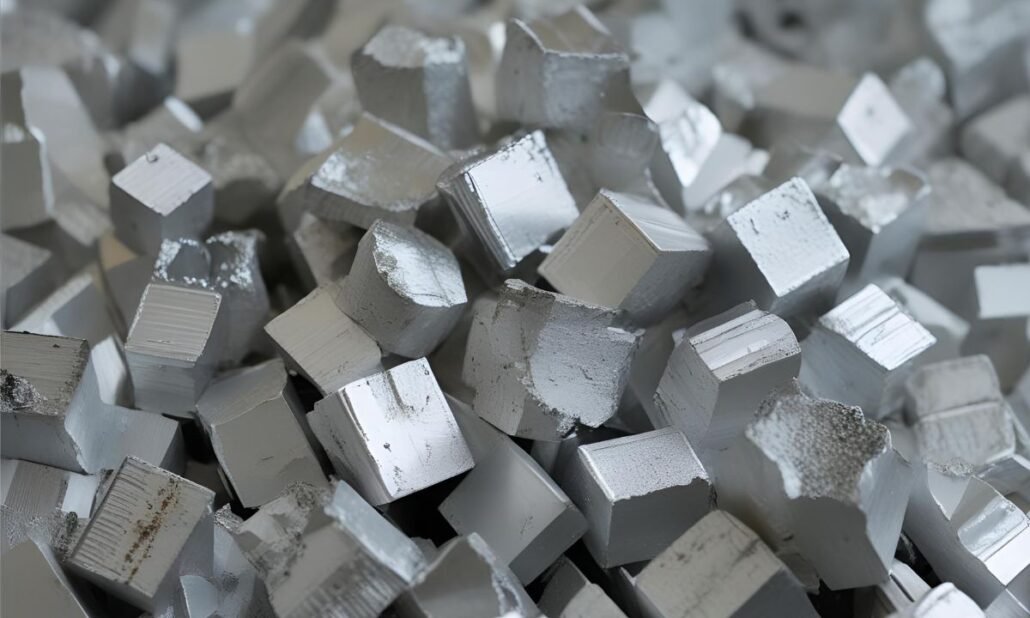
Which Aluminum Alloys Are Best for Welding? Aluminum has become the most popular of the metals used in contemporary industries because of its high portability, strong resistance to the elements and ease of fabrication. Its alloys are invaluable in the aerospace, automotive and marine as well as housing and building industries. But the challenges created by welding aluminum are different to welding other metals, in part because of the high thermal conductivity, speed of oxide formation and distortion and cracking characteristics of aluminum in the welding process. Knowledge of the properties and the characteristics of various aluminum alloys is important in the choice of the material that suits a particular task. Not every aluminum alloy is equally weldable, whereas some are well-adapted to traditional welding, others need some special welding procedure like friction stir welding. The alloy selection and method of welding depends on such factors as strength, resistance to corrosion, ductility, and the ability of heat-treating. Surfaces must also be properly prepared, filler metals need to be compatible and post-weld treatments must consider to achieve high-quality junctions. The article will give an in-depth report on the best types of aluminum alloy to be welded, their characteristics, the benefits associated with their usage, recommendations to follow and the challenges to expect when welding these types of aluminium alloy. Based on such knowledge, professionals will be in a position to achieve durable, reliable and good performing welded structures across diverse industrial and structural applications. What is aluminum alloys Aluminum alloys are the materials used by adding other metals to the aluminum to enhance its qualities like strength, corrosion resistant, machinability or weldability. Pure aluminum is weak, lightweight, soft, and very well resistant to corrosion. By mixing additional elements (such as copper (Cu), magnesium (Mg), silicon (Si), manganese (Mn), or zinc (Zn)), engineers can make alloys suitable to a variety of types of applications, including aerospace, automotive parts, marine and building structures. A few points of aluminum alloys Simply put, aluminum alloys have the lightweight, corrosion-resistant properties of aluminum with extra favorable qualities needed to suit the needs of an industrial application. Knowing the Aluminum Alloys Aluminum alloys have been divided into wrought alloys and cast alloys. Mechanically worked alloys are wrought into sheets, plates or extrusions but casting alloys are in form of poured molten aluminum into molds. The wrought alloys are further divided into series according to the alloying elements: Conditions which Affect Weldability Aluminum alloys can be welded, depending upon a variety of factors: The best Aluminum Alloys to weld on 5052 Alloy Al-Mg (aluminum-magnesium) alloy 5052 is considered by many to be one of the most welding friendly alloys. This is due to its high magnesium content and therefore it has good resistance to corrosion, especially in marine environments and applications in chemical processing. Applications: Moderate-to-high strength, high ductile and above-average corrosion resistance. Advantages: Materials: Marine structures, Chemical tanks, automotive panels, roofing sheets and industrial equipment. Alloy 5083 Aluminum-magnesium alloy 5083 has high strength at low temperatures and thus is applicable in marine and cryogenics. It resists corrosion especially in industrial and seawater. Characteristics: Extra-high strength, good corrosion protection, good fatigue resistance. Advantages: Applications: Shipbuilding, pressure vessels and tanks, automotive frames and equipment and transportation equipment. 5754 Alloy Another Al-Mg alloy is A-Mg 5754 which can be described as medium strength with high corrosion resistance and high formability. It also achieves structural strength, as well as, weldability and that is why it is commonly used where structural strength is key as well as weldability. Characteristics: Moderate strength, high ductility, is corrosion resistant. Advantages: Applications: Auto Body panels, structural panels, construction cladding, and marine. 6061 Alloy Al-Mg-Si alloy with the composition 6061 has found wide usage in the structural and aerospace fields. It is a compromise between toughness, corrosion resistance and utility. Type of properties: Medium-high strength, very good corrosion resistance, and moderate ductility. Advantages: Applications: Aircraft structures, pipeline, automotive components, bridge structures and structural products. 6063 Alloy Al-Mg-Si alloy (6063) is another architectural and decorative Al alloy that is noted to have a smooth finish on its surface and the ability to resist corrosion. Properties: A strong or moderate strength, good corrosion resistance, a good surface finish. Advantages: Applications: Architectural structure, window frames, doors, curtain walls and extrusions. Alloy 1100 Aluminum alloy 1100 can almost seem a pure aluminum alloy (it is 99% aluminum). It is soft, ductile and very easy to weld so it is suitable where resistivity is the issue rather than strength. High ductility: Excellent corrosion resistance, Low strength. Advantages: 1350 Alloy Another aluminum alloy of high purity applicable in the electrical and chemical industries is1350. It is incredibly strong and has great corrosion resistance as well as being very weldable and is a very dependable metal when used in specialized settings. Advantages: Immune to corrosion, excellent welding ability and low weight. Advantages: Aluminum Alloys, as well as of their major properties and the ability to be welded The technical table below contains the list of the full proper names of the aluminum alloys, as well as of their major properties and the ability to be welded: Alloy (Proper Name) Density (g/cm³) Melting Temp (°C) Tensile Strength (MPa) Yield Strength (MPa) Elongation (%) Hardness (HB) Weldability Aluminium 1100 (Commercially Pure Aluminum) 2.71 640 90 35 35 40 Excellent Aluminium 1350 (High Purity Aluminum, Electrical Grade) 2.71 640 110 40 20 50 Excellent Aluminium 5052 (Aluminium-Magnesium Alloy) 2.68 607–650 228 193 12 60 Excellent Aluminium 5083 (Aluminium-Magnesium Alloy, Marine Grade) 2.66 635 317 228 12 70 Excellent Aluminium 5754 (Aluminium-Magnesium Alloy) 2.67 637 250 190 15 60 Excellent Aluminium 6061 (Aluminium-Magnesium-Silicon Alloy) 2.70 582–652 310 276 12 95 Good Aluminium 6063 (Aluminium-Magnesium-Silicon Alloy, Architectural Grade) 2.70 615 241 214 8 90 Good Aluminium 2024 (Aluminium-Copper Alloy, Aerospace Grade) 2.78 500–640 483 345 20 120 Difficult Aluminium 2219 (Aluminium-Copper Alloy, High Strength Aerospace) 2.84 509–638 470 330 18 130 Difficult Aluminium 7075 (Aluminium-Zinc-Copper Alloy, Aerospace Grade) 2.81 477–635 572 503 11 150 Very Difficult This is